
Neck and thyroid surgery
Thyroid surgery in Ciudad Juárez
Nodules, goiter, and thyroid conditions with a surgical indication
When a nodule or goiter grows, compresses structures, or shows risk findings, thyroid surgery is the definitive treatment. I explain the plan step by step.

Common signs of thyroid problems
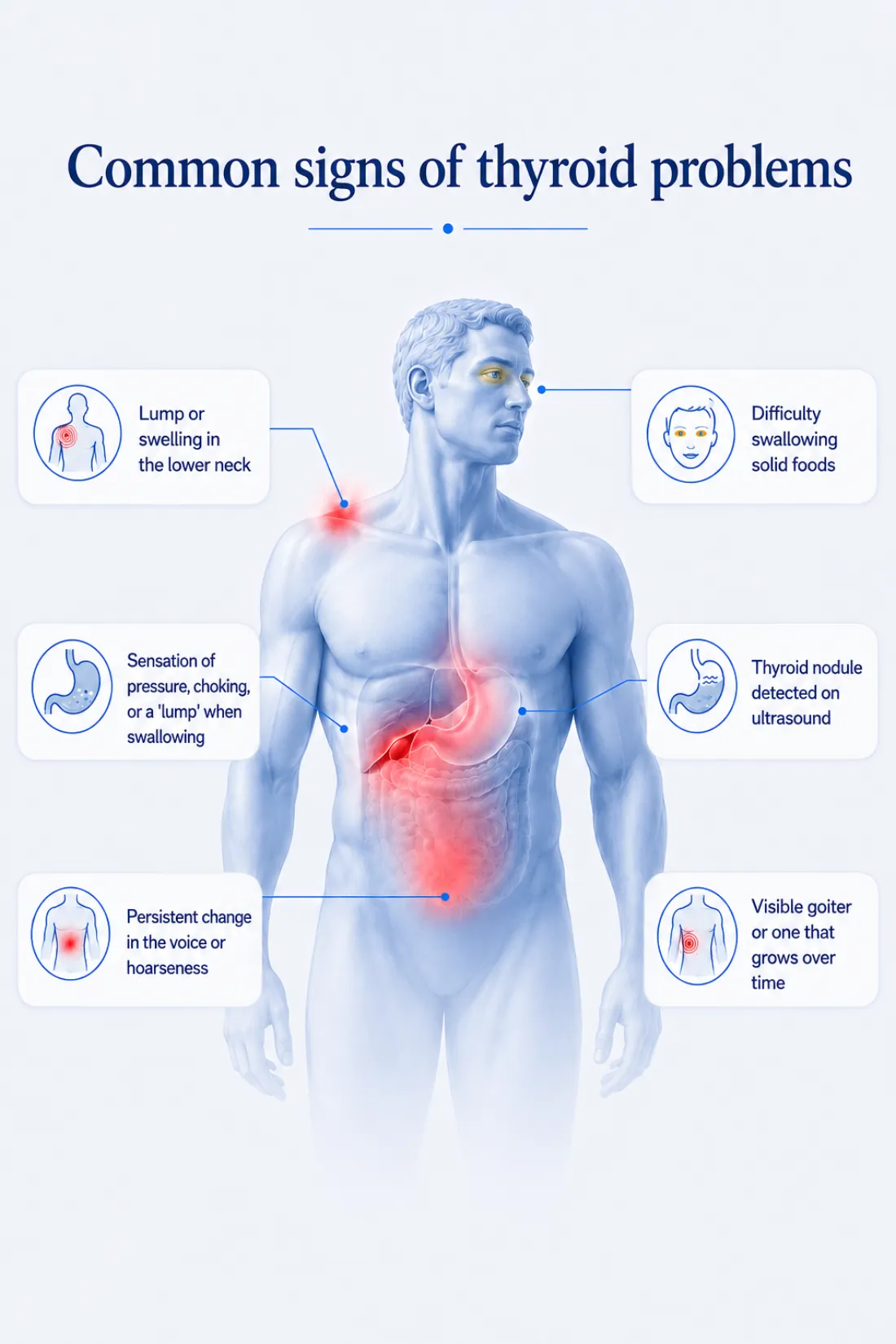
- Lump or swelling in the lower neck
- Pressure, shortness of breath, or a “knot” when swallowing
- Voice change or persistent hoarseness
- Difficulty swallowing solid foods
- Thyroid nodule found on ultrasound
- Visible goiter or one that grows over time
What is thyroid surgery like?
The plan depends on the diagnosis (lobectomy or thyroidectomy):
- Incision in a natural neck crease
- Removal of the affected lobe or the whole gland as needed
- Careful protection of nerves and parathyroid glands
Individualized plan
Surgery extent is defined with studies
Discreet scar
Incision aligned with a neck crease
Safety
Careful technique around nerves and parathyroids
Close follow-up
Support through recovery and labs
Frequently asked questions
Does every thyroid nodule need surgery?
No. Many are watched with ultrasound. Surgery is indicated with suspected malignancy, growth, compression, or biopsy results that call for it.
Will I need thyroid hormone for life?
If the whole gland is removed, yes. If only one lobe is removed, the other half may cover function. We define this by surgery type and your labs.
How long is recovery?
Most people resume light activities in a few days. Avoiding neck strain and heavy lifting is advised for a short period depending on the case.
Will the scar be very noticeable?
It is placed in a natural neck crease and usually becomes very discreet with time and scar care.

Were you diagnosed with a thyroid nodule or goiter?
Book an evaluation to review your studies and decide whether surgery is the best option.